

Knowing how long a portable building takes is often as important as knowing the cost. A construction firm needs its site office in place before the contract starts. A school needs a temporary classroom ready before term begins. An event organiser or retailer needs a unit on site with time to spare for last-minute changes.
Lead times in Ireland vary a lot, from very quick for a standard cabin already in stock, to much longer for a multi-module building. Knowing what drives that range helps you plan properly and avoid delays that could hold up the rest of your project.
This guide covers what affects lead time, typical timeframes by building type, the steps from enquiry to handover, and how renting compares with buying when time is tight.
What affects lead time for a portable building?
Several things affect how quickly a portable building can be delivered and set up, and they often work together.
- Specification: a standard, stock-based unit is far faster than a bespoke design built to order.
- Size and complexity: a single cabin is quicker than a multi-module building requiring several units to be assembled on site.
- Site access: narrow access, overhead obstructions or difficult ground can affect delivery scheduling, particularly for crane-assisted delivery.
- Groundworks: hardstanding, foundations and utility connections need to be ready, or at least underway, before installation.
- Planning permission: if permission or a formal exemption confirmation is required, this should be resolved before delivery is booked in.
- Provider workload: demand varies by season, and busier periods can extend lead times even for standard units.
The order-to-installation process
Every provider works a little differently, but most portable building projects in Ireland follow a similar process from first enquiry to handover.
1. Enquiry and site assessment: initial contact, a discussion of requirements, and often a site visit or remote assessment to confirm access and ground conditions.
2. Design and quotation: confirming layout, size and specification, usually soon after the first enquiry.
3. Order confirmation and deposit: most providers require a deposit before manufacturing begins, so this step should not be left until the last minute.
4. Manufacturing: the main driver of overall lead time, carried out off-site in factory-controlled conditions, though this would only usually apply for a bespoke unit.
5. Site preparation: hardstanding, foundations and utility runs, which can usually be carried out in parallel with manufacturing.
6. Delivery and installation: quick for a standard cabin and taking longer for a larger multi-module building.
7. Connection and handover: connecting power, water and any other services, followed by a final walkthrough and sign-off.
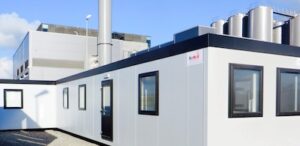
How lead times differ when you rent a portable building versus buying one
If time is tight, whether you rent or buy the building can make a real difference to how quickly it arrives.
| Factor | Rental | Purchase |
| Stock availability | Higher, hire fleets often hold ready units | Lower, especially for bespoke specifications |
| Typical lead time | Faster, often from stock already available | Slower, particularly for bespoke specifications |
| Customisation | Limited to available stock configurations | Full customisation possible |
| Contract flexibility | Short-notice extensions or unit swaps | Fixed once delivered and installed |
How to get your site ready while you wait
Even well-planned projects can slip. Most delays come down to a few common issues, and knowing about them ahead of time makes them much easier to avoid.
- Late changes to specification after the order has already gone into production.
- Site not ready for delivery, such as missing hardstanding or restricted access.
- Planning permission not yet confirmed before delivery is due.
- Peak season demand, particularly ahead of the school year and during busier spring and summer months.
- Supply chain delays for bespoke fittings or non-standard finishes.
How to speed up your timeline
- Choose a standard specification: where the layout allows, stock units are almost always faster than bespoke builds.
- Confirm site readiness early: have hardstanding, access and utilities sorted before placing your order.
- Resolve planning permission early: confirm whether permission or an exemption applies as soon as the project is scoped.
- Book ahead of peak season: ordering early for the summer or back-to-school period helps avoid seasonal slowdowns.
- Choose a provider that manufactures in Ireland: shorter transport distances reduce the risk of delivery delays.
Industries That Need Fast Turnaround
Speed of delivery matters most in sectors where a delay has knock-on costs elsewhere:
- Construction: a site office or welfare unit is often needed before other trades can start
- Education: temporary classrooms usually need to be ready before a specific term date
- Healthcare: interim clinical or admin space during refurbishment often runs to a fixed project schedule
- Events and retail: pop-up space is tied to a fixed event date or seasonal trading window
Got a fixed start date? Don’t let a late delivery hold you up. Contact us
Frequently Asked Questions
How long does it take to get a portable building in Ireland?
This depends on what’s in stock and the current build schedule rather than a fixed timeline, so it varies by provider. With EcoMod, the installation process is usually done within a day once a standard unit arrives on site, though how long it takes from order to delivery depends on what’s available and how busy the production line is.
Why do bespoke modular buildings take longer?
Bespoke buildings are made to order rather than taken from stock, so the lead time includes design sign-off, sourcing custom fittings, and building the whole thing off site before delivery.
Does planning permission affect delivery lead time?
Yes. If your project needs planning permission, or formal confirmation that it’s exempt, this should be sorted before you schedule delivery, as it can add a fair bit of time to the overall timeline.
Can I speed up delivery by choosing rental instead of purchase?
Often, yes. Hire fleets usually keep standard units in stock, so renting can be faster than buying, especially for common setups like site offices or welfare units.
How long does installation take once the building arrives on site?
A single portable cabin can often be set up within a day, as long as the site is ready and access is clear. Larger modular buildings with several units take longer to fully assemble and connect.
Do lead times change with the seasons?
Yes. Demand tends to peak before the school year and during the busier spring and summer construction months, which can push lead times out. Booking early where you can helps you avoid these seasonal delays.
Can I track my order once it is in production?
Most providers will confirm a manufacturing and delivery schedule after order confirmation, and many offer regular updates or a point of contact you can check in with throughout production.
What happens if my site is not ready when the building is due to arrive?
Delivery may need to be rescheduled, which can push back your installation date.